
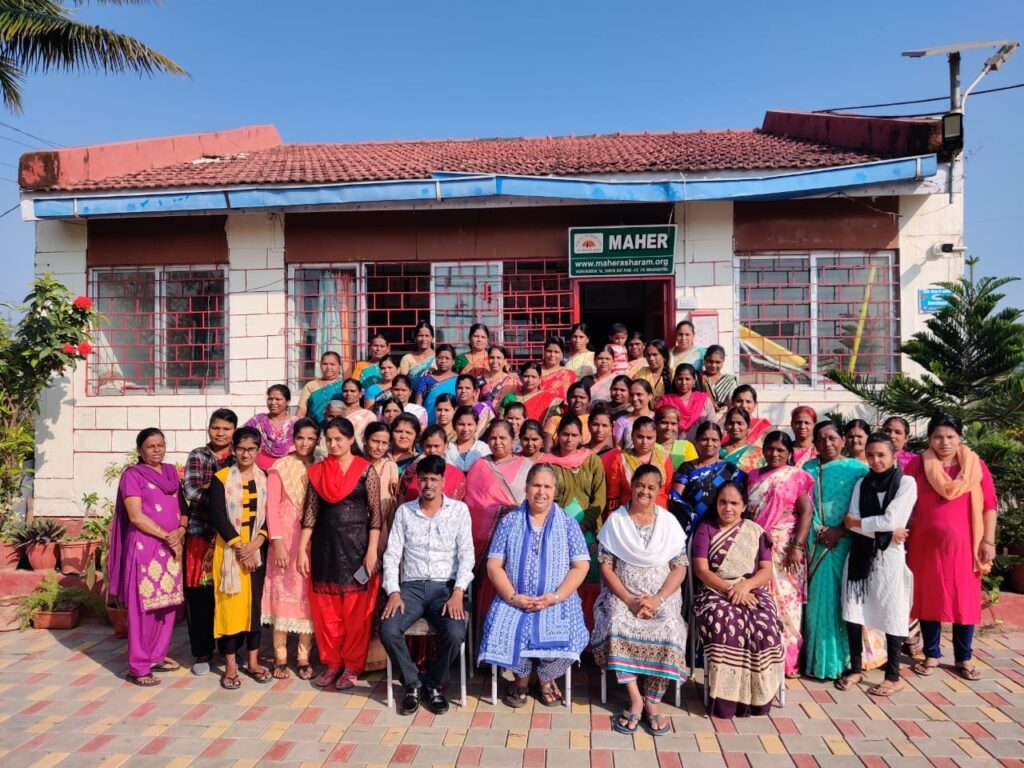
Maher is a faith values centred non-profit organisation founded in 1997 by Sr. Lucy Kurien to support and empower destitute and marginalised women, children, and men in India.
When I first met Sr. Lucy in London, I was deeply struck by her profound humanity and humility – qualities that reflect a person living in full alignment with her true nature and purpose.
I have long felt a deep connection with India – a country whose people continue to live with the complex legacies of colonialism, and whose challenges are often intensified by today’s global economic inequalities and the dominant culture of overconsumption.
Inspired by Maher’s distinctive interfaith and community-based model of empowerment, and Sr. Lucy’s embodiment of feminine principles in action, I chose to take some time out from my career HR recruitment consultancy within the humanitarian, human rights, and environmental sectors to volunteer on the frontline with Maher in India in 2017.
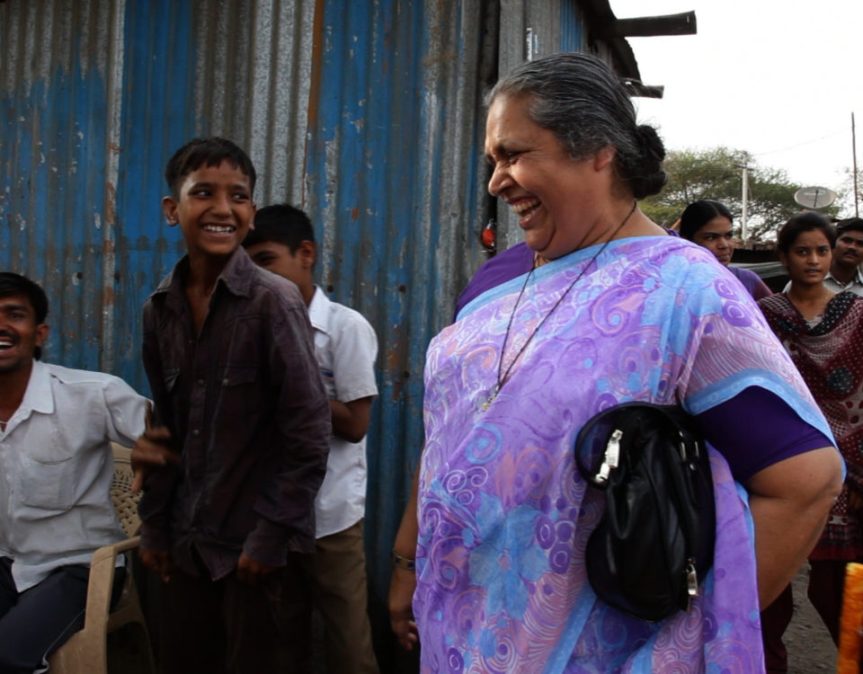
India is an incredible country, with rich heritage and culture. I instantly fell in love with the people, the land, the food, and the diversity – of everything!
In sharing about the work of Maher, I feel it is important to acknowledge some of the painful social realities that persist in India, particularly concerning the treatment of women and girls. My intention, however, is not to cast any negative light, but rather to highlight an inspiring initiative that is pioneering a holistic, values-based approach to addressing these systemic challenges – challenges that exist, in varying forms, in every society across the world.
In 1991, Sr. Lucy was living in a convent in Pune, India. A pregnant woman came to her seeking shelter and protection from her abusive, alcoholic husband. He told her he had fallen in love with another woman, asked her to leave and threatened to kill her if she did not comply with his demand.
The rules of the convent prevented Sr. Lucy from letting the woman stay, but she felt concerned for this woman, and asked her to return ‘ first thing tomorrow morning’ while she came up with a solution.
That very night the lady’s husband doused her with kerosene and set her on fire. Sr. Lucy was awakened by the sound of commotion and ran outside to determine the cause.
She saw the same woman who had asked for her help just a few hours earlier, running towards her, crying out, as fire engulfed and consumed her body. She took the woman to the nearest hospital, but the doctors were unable to save her, or her unborn baby she had been carrying in her womb for seven months.
That night haunted Sr. Lucy, and changed the course of her life. Shattered by the tragedy, she wanted to do something concrete for these women.
With permission from her congregation and church authorities, she came out of her community life to live among, and work for, the destitute people. She stepped out, alone, into the unknown, wholly trusting in the presence of love in her heart, and trusting in the Divine to provide all that was necessary for the work.
It took a long time before Sr. Lucy found the resources she needed. She lived with the poor people herself, and often slept with an empty stomach, while nurturing the seed of the vision for the work in her heart, and attending to the poor around her. She persisted, and kept her faith.
Finally, through the support of Father Francis D’Sa and friends, Sr. Lucy set up the first Maher house, in the small village of Vadhu-Budruk on the outskirts of Pune in 1997. It was here that I spent my time, along with approximately 220 children, staff, housemothers and 3 wonderful international volunteers.
Since its founding, Maher has grown from one small home to 43 homes in three Indian states. As I write this in January 2018, Maher has impacted 38,860 + beneficiaries through work in offering residential homes, slum and village outreach programs, livelihood training and awareness programs.
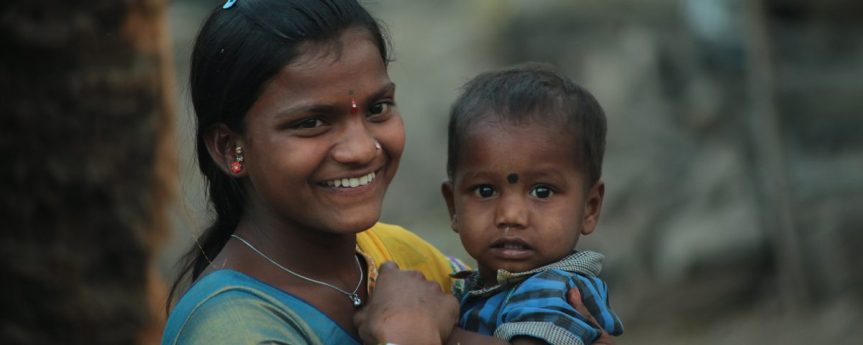
The charitable organization is run on a core philosophy of offering a sincere and loving approach to improve the conditions of the disadvantaged and underprivileged. “Maher” means “Mother’s home” in the local Marathi language. It certainly lives true to this spirit – the feeling of a ‘family’ is palpable, the presence of love is real.
It was inspiring to see the way the older children looked out for the younger children, how each person chipped in with the household duties, how people encouraged and cared for each other.
I was touched by how the teenage boys communicated with each other from their hearts, and put the needs of others first, often holding back to eat last at community events to ensure everyone else was served first.
The types of empowering programs Maher delivers in local communities are too numerous to mention here. Some of these initiatives include: award-winning values-based education, employment and skills training and tree planting initiatives. Maher has currently set up 550+ self-help groups in more than 100 villages with more than 10,000 members.
The children create street theatre performances to educate villagers on awareness issues relating to health, hygiene, care for the girl child, family violence and the environment. Maher also conducts clean-up days in the begging communities, and offers psychotherapy and counseling, addiction programs, cultural and sports training, youth groups, and more!
Where possible, Maher supports family reunification, providing counseling, work training and other services as needed to support healthy and stable homes. Many women and children stay at Maher for a short time and then re-unite with their families, others stay and attend school, university, and go on to get married and raise their families with the higher social values they learned at Maher.
Others train to be housemothers or counselors and stay to work at Maher, where their compassion and understanding are unparalleled.
Maher’s doors welcome children and adults from every faith, belief and background: Hindu, Buddhist, Muslim, Christian, and more.
Sr Lucy has nurtured within Maher a culture of spiritual inclusivity – one that teaches children the essence of the world’s great faith traditions: that the light of the Divine dwells within every person; that compassion, peace, and love are values shared by all; and that each religion offers its own unique path to the Divine.
When the children grow up they are encouraged to discern and follow the spiritual path that resonates most deeply with their own hearts. Some of the very inspiring young people have gone on to represent India internationally in various conferences and events, and there are many youth peace leaders of the future currently in Maher.
Maher cites “Re-awakening our personal relationship with Mother Earth and treating her as the body of the Divine” as one of its core values. The children, women and men are taught about the fundamental interdependence of all life and include the earth in their daily prayers.
As a spiritual ecology community organiser – witnessing and being part of this made my heart sing! There are also numerous and inspiring earth care, conservation and regeneration initiatives taking place, and in 2017, on Maher’s 20th Anniversary, Sr. Lucy established the Interfaith Association for Service to Humanity and Nature.
It is no surprise that Maher’s efforts to strengthen India by providing empowering opportunities to individuals and communities have been recognized nationally and internationally. Maher has been granted Consultative Status with the United Nations Economic and Social Council, and the organisation has received more than 130 awards for the contribution it makes to the betterment of women.
As volunteers, we were often told that “the most valuable contribution we could make was simply to be with the women and children, to give them love, time, and encouragement.”
We each felt that we were the fortunate ones to be present in Maher, and to have been so warmly welcomed into the Maher family with open arms.
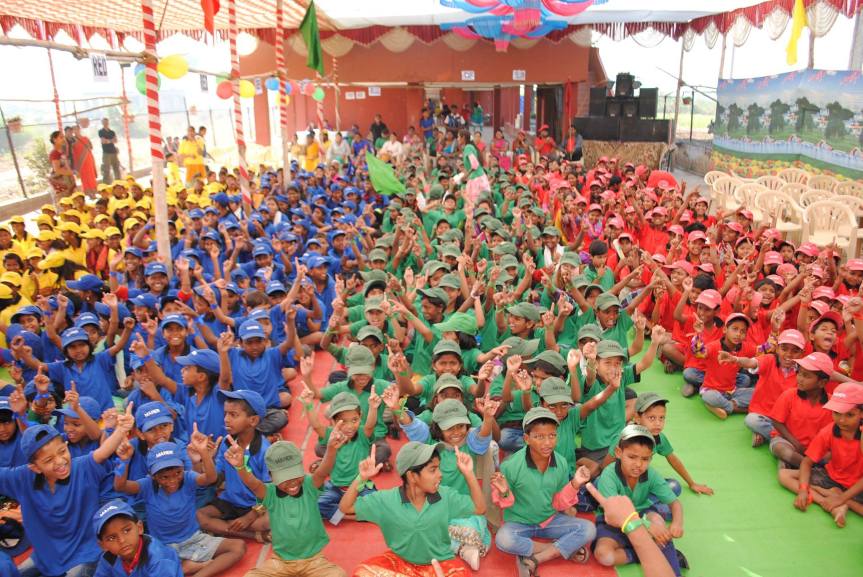
One of my favourite personal memories was dancing with a group of women at Vatsalayadham, where there are approximately 120 women with mental health challenges, 40 elderly women, 80 children, plus staff, housemothers and care workers.
United in the rhythm of the music, it didn’t matter who we each were, where we came from, what our backgrounds were, what our histories were, or what tomorrow would bring to each of us. We were present, in this moment and in this aliveness together, having fun in our shared humanity.
Yet even in that laughter and light, I was acutely aware that many of the women I was dancing with might not have been alive today were it not for the courage of Sr. Lucy, and the unwavering dedication of the staff members of Maher.
The realness of Maher touched me to my very core. The staff meet the simple and complex needs presented to them on a daily basis with pure, down-to-earth sincerity, love and 100% commitment.
There are peals of laughter and joy heard around Maher many, many times a day! When I asked some of the staff what sustains them, they each said: ‘the love of the children, prayer, meditation, and witnessing Sr. Lucy’s utmost dedication of service to people.’
Sitting regularly at dinner with Sr. Lucy and her team, the volunteers and I heard many Maher stories. There were stories that melted my heart, broke my heart, and others that caused me to belly laugh so much that the tears rolled down my cheeks to the ground!
The most touching story I heard was of a time when Sr. Lucy was awakened one night by a commotion coming from the boys’ room.
When she went in, she discovered that someone had put hot pepper into the boys’ eyes while they were sleeping. After all the boys were examined, attended to and questioned, Sr Lucy found that one of the boys hadn’t been injured. Identifying the culprit, she asked him to apologise to the other boys, but he refused.
This same boy had been extremely physically abused before he came to Maher. His inner state was deeply untrusting and distressed, and it was likely that this act of violence was his only form of communication. Sr. Lucy persisted speaking to the boy, hoping to help him understand the pain he had caused, the seriousness of the situation, and the consequences of his actions. He still refused to apologise to the boys.
Sr. Lucy then spent time with each of the boys that he had hurt, and helped them to understand that his behavior were about the pain he had suffered and continued to suffer inside. Sr. Lucy convinced each of them to apologise to the boy. One by one, they told him that they were sorry for his pain. That experience completely altered the boy’s heart – and the course of his life.
Sr. Lucy is a woman who has allowed her heart to be broken time and time again for everyone in her family, and for the neglected people still in the slums in Indian society.
She works with complete integrity, and with a heart burning with unconditional love she welcomes everyone in, regardless of caste, creed or religion. She says “Love is my religion.” The mission she has set for Maher is to work systemically until there is no longer any need of organisations such as Maher – which in itself speaks volumes about the beauty of her heart.
The integrity of our spirit depends on us living true to our core values, and on listening to and meeting the real needs in our families and communities, with loving practical care.
In these times of escalating climate emergency and social crises, the simple, values-based approach of Maher is a light in the darkness and I believe this local grass-root organisation is a role model for creating long-term systemic social change which any community would benefit from modelling.
You can learn more about Maher here.
Reflections from Lynda Morrissey, 2018.